Chick Hatched with Yolk Sac Attached? Emergency DIY Fix Guide
When I first shared our ‘Chicken Saga’ back in October, the story of saving our chick with the ‘belly button’ issue was tucked right into the middle of our collection of stories and lessons on raising chickens. It’s hatching season again, and I realized recently that for someone in a late-night yolk sac emergency, scrolling through fox stories to find medical steps isn’t ideal! I’ve decided to give that miracle chick his own dedicated guide so the ‘how-to’ is front and center for anyone who needs it.
Disclaimer: We aren’t vets; however, I am a Registered Nurse, and Carson has grown up caring for chickens and other animals on the farm. This DIY method saved our chick when we had no other options.
While unabsorbed yolk sacs can be fatal, intervention is possible.
If your chick hatched with its yolk sac attached, the most important thing is to keep it isolated and humid. Do not pull or cut the sac if it is intact. If it is ruptured or bleeding, follow the ‘Tuck and Tie’ method below.
First Isolate the Chick then Assess
- Isolate the chick: Gently remove the chick from the brooder/incubator to prevent other chicks from pecking at the injured area.
- Assess the severity: Wait a few hours after the chick is fully dry (unless the chick is actively bleeding out). If the umbilical cord and yolk sac are still attached and there is active bleeding or internal tissue coming out, intervention is necessary. If there is no active bleeding or active pulling on internal tissue and the chick is active, just continue to monitor; it will most likely heal on its own.
How do I know when to intervene?
- Normal:
- A small, dried black string (like a human belly button scab). Action: Do nothing.
- Emergency:
- Red, moist tissue that looks like “gut” hanging out or being pulled out by tension from dragging around the sack. Action: Follow the guide.
- A soft, yellow/pink “balloon” (the yolk):
- Intact and moist yolk sac. Action: Isolate from other chicks to avoid pecking and keep chick warm and sac moist. Some people recommend using a clean washcloth damp with warm water, but make sure not to cover/smother the chick’s breathing with this method.
- Leaking/active bleeding of the yolk sac proceed with this guide (Note: If the yolk sac has ruptured completely, this is very bad sign the chick may not make it even with the best care.)
Do NOT tie off a healthy, leak-free yolk sac because that’s its primary food source. If the chick is absorbing the yolk, tying it off too early can actually deprive the chick of much-needed nutrients that would help it survive its first 48 hours.
If the yolk sac is whole and the chick is just taking its time absorbing it, isolation and humidity are best. Only use the ‘Tuck and Tie’ method if the membrane has ruptured, is actively bleeding, or like our case, is dried up dragging and pulling out gut tissue.
If the yolk is fully lost, the chick loses its internal food source. You will need to encourage them to drink and eat much sooner than a normal hatchling.
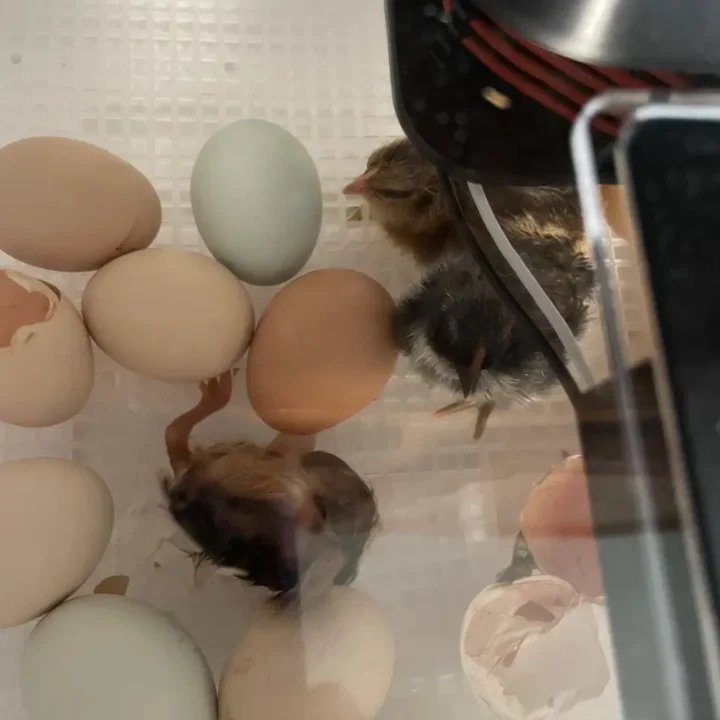
How to Fix a Chick Umbilical Cord & Unabsorbed Yolk Sac
A step-by-step emergency guide for backyard chicken keepers on how to safely treat a chick with an unabsorbed yolk sac or umbilical cord injury using simple household supplies.
This 'tuck and tie' method was used to save a chick when internal tissue was exposed and active bleeding occurred.
Disclaimer: We are not veterinarians. Carson has a lifetime of experience in livestock care, and I am a Registered Nurse; however, this guide is for informational purposes only. Please consult a vet if one is available.
Materials
- Dental floss or thin twine
- Iodine or Betadine (topical disinfectant)
- Small piece of gauze or a bandage
- Medical tape (used sparingly)
- Olive or Coconut oil (for safe bandage removal later)
Tools
- Very sharp scissors (disinfected)
- Good lighting or a small flashlight or headlamp (to see the tiny area)
- A second set of hands if possible (to hold the chick still)
- Work under a warm lamp or in a heated room to prevent the chick from getting chilled during the procedure.
Instructions
- Isolate and Assess. Remove the chick from the incubator or brooder to a clean, quiet workspace. If the cord is dry and there is no bleeding, leave it alone. If there is active bleeding or exposed tissue, proceed.
- Clean and Prepare: Ensure your hands are clean, and tools are disinfected. Have an assistant hold the chick gently but firmly. Disinfect the entire area thoroughly with Iodine to prevent infection.
- Tie off the cord: If there is bleeding from the cord, use the thin twine to carefully tie off the umbilical cord a small distance (about 1/4 to 1/2 inches) from the chick's body. The goal is to stop the bleeding.
- The "Gut Tuck": While the area is still moist from the Iodine, very gently tuck any exposed internal tissue back into the chick's body. It's like a DIY mini-version of hernia repair.
- Cut the umbilical cord as far from the chick as possible: Cut the umbilical cord away from the attached piece of sac. Don’t cut any more than you have to. Having more distance from the chick’s internals minimizes infection risk. The cord will dry out and heal on its own after this.
- Apply a bandage (optional): If the gut was sticking out, a bandage provides support while it heals in place; otherwise, it’s just a barrier to keep things clean and prevent other chicks from pecking it as it heals, and is optional. Carefully place a small piece of bandage or gauze over the area to keep it clean, using as little tape as possible to hold it in place without restricting the chick's movement or breathing, and trying to avoid feather damage. (See step 8 for bandage removal.) Make sure not to ever tape all the way around a chick’s body, as this can restrict their rib cage expansion, leading to suffocation.
- Ensure the chick can easily reach food and water and monitor closely: Place the chick back into a secure, clean, warm area and monitor it for the next 24-48 hours for signs of infection, distress, or other complications.
- Use oil for easy bandage removal: This causes the adhesive to release from feathers without damage. Change the bandage every 24 hours, disinfecting the area again with iodine to prevent infection until the area is no longer open. Once the area is healed and no longer exposed, remove the bandage.
Notes
Pro tip: If you ever need to remove an adhesive, such as tape, a Band-Aid, glue, or a sticky trap, from something and are having trouble, it comes off more easily with oil. Most oils will work, but if you are helping an animal or human, double-check to make sure it is okay for their skin, feathers, or fur.